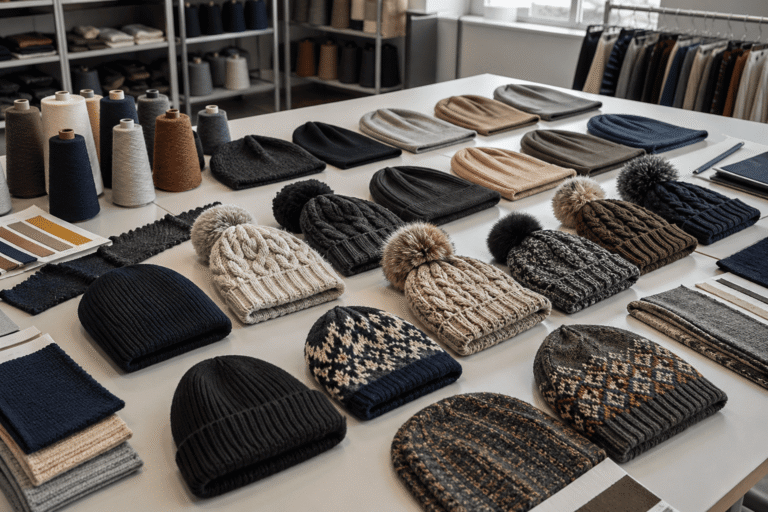

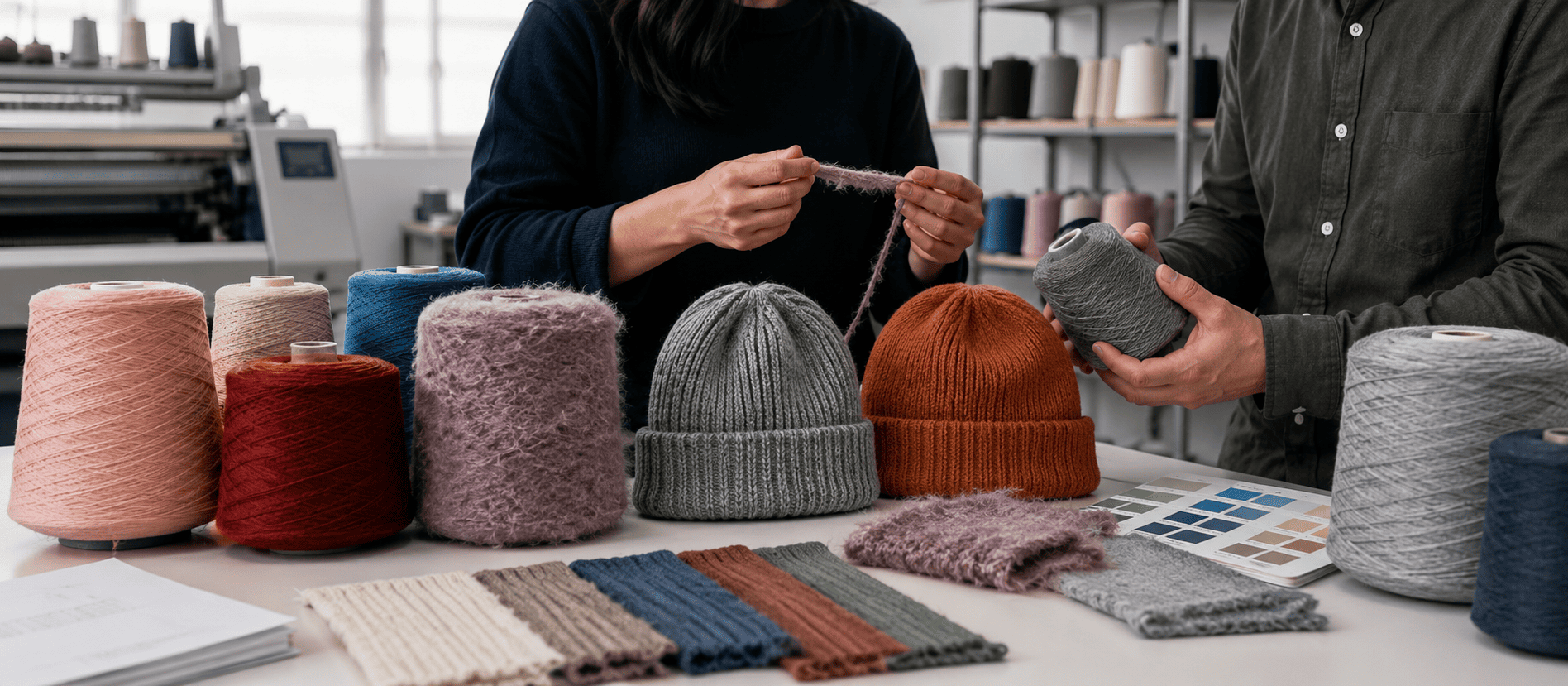
Confused by inconsistent beanie prices for the same yarn type? This unpredictability makes budgeting a nightmare. The secret lies in understanding the yarn's hidden details, not just its name.
Yarn price is determined by more than just its name, like "angora" or "acrylic." Factors like fiber content percentage, thickness, origin, and even dye color significantly impact the final cost of a beanie. These details define the quality and price point.
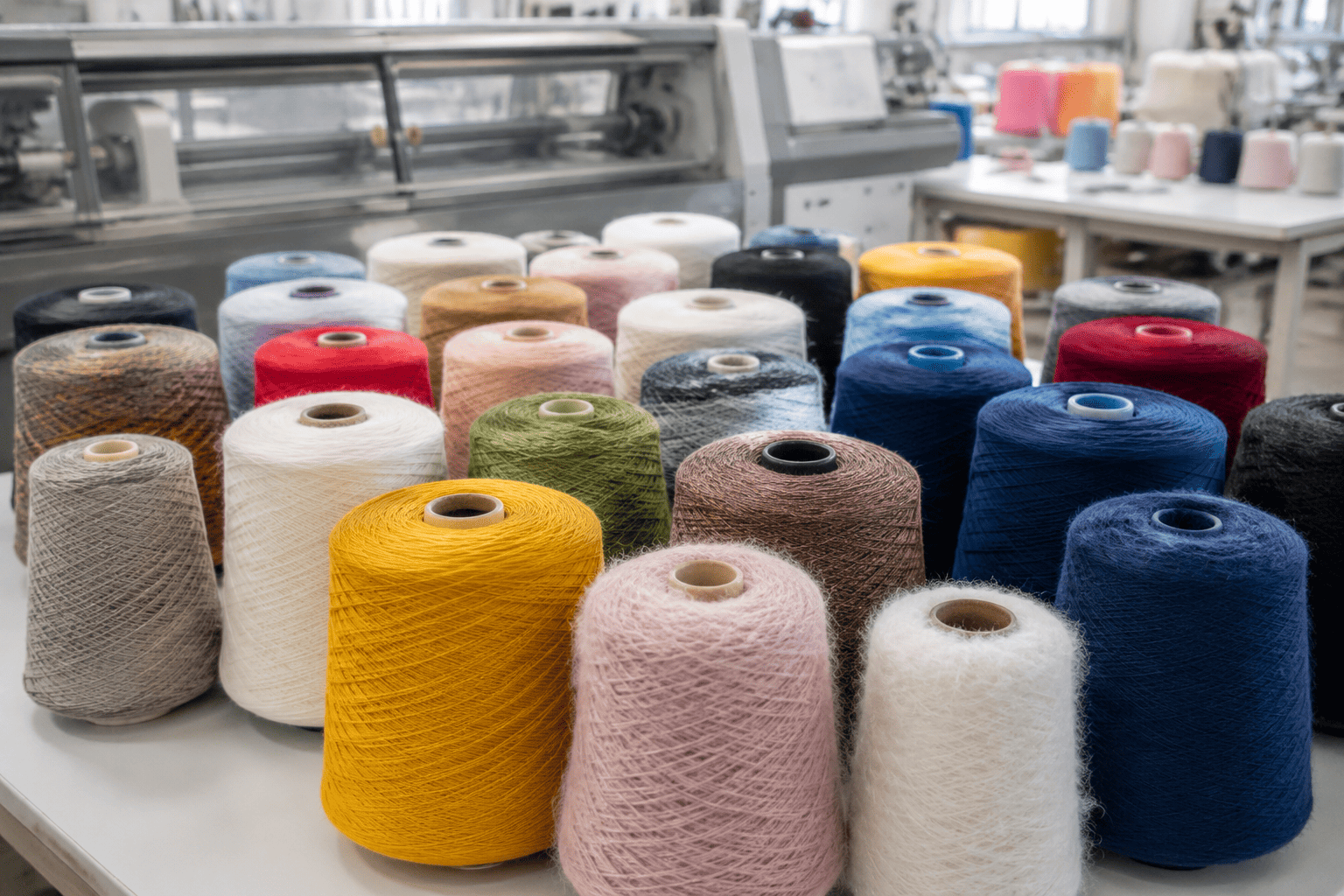
It's a question I hear all the time from clients. They see a sample labeled "acrylic" and wonder why it costs more or less than another "acrylic" beanie they sourced elsewhere. The truth is, the material cost is the biggest part of a beanie's price1, and the details go much deeper than a simple label. Let's break down what really drives these costs, so you can make smarter sourcing decisions for your brand.
Why do beanies with the same yarn label have different prices?
Frustrated when two "Angora Blend" beanies have drastically different quotes? It makes you doubt the value and transparency. The answer isn't in the name, but the specific content percentage.
A yarn's label, like "Angora Blend," is just a starting point. The actual cost depends on the percentage of angora (e.g., 5% vs. 50%), its thickness, and ply count.2 Higher percentages and heavier yarns require more material and machine time, directly increasing the beanie's price.
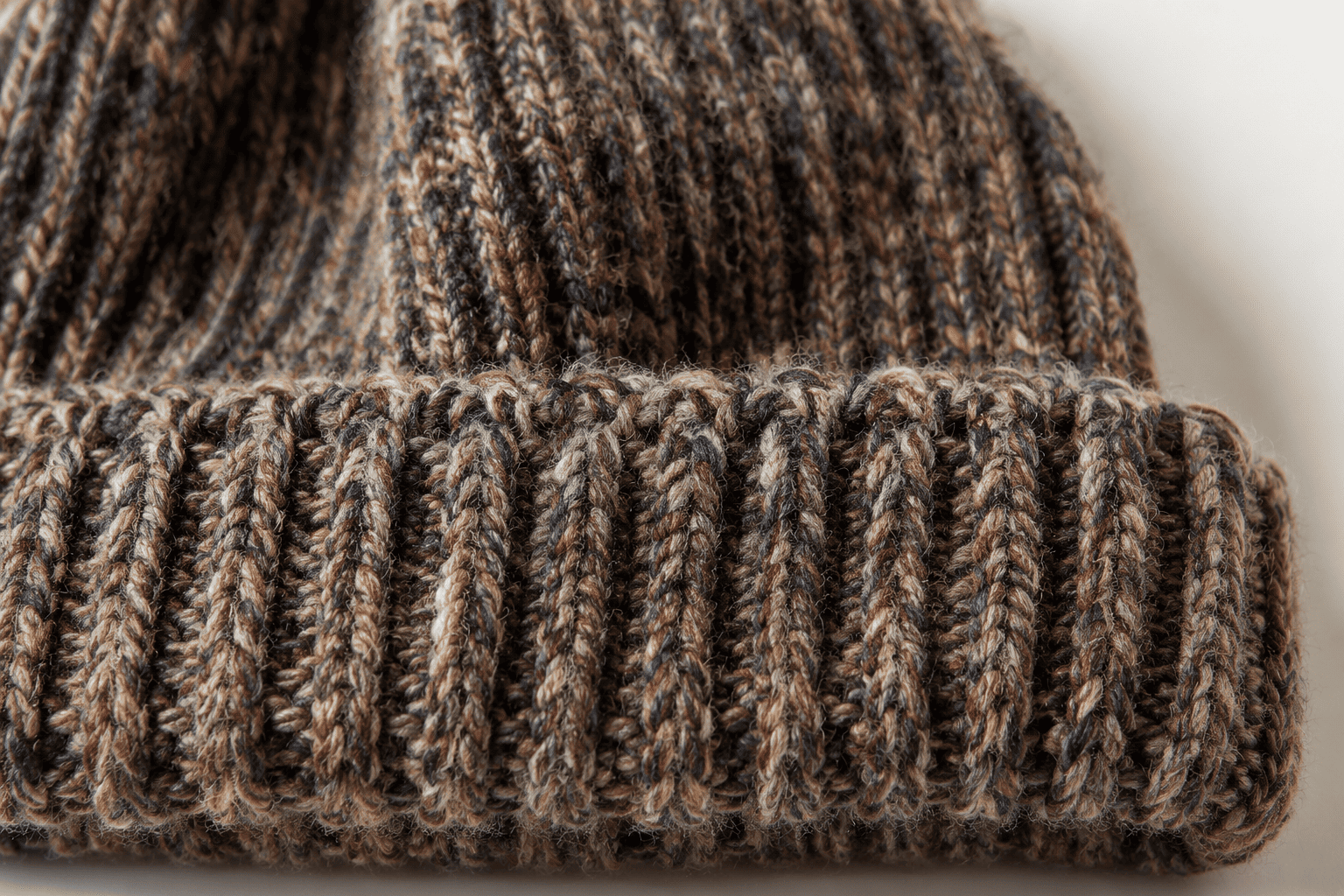
When we talk about yarn, the name on the label is only half the story. The real cost driver is what's inside that blend. A small difference in composition can lead to a big difference in price.
Content Percentage is Key
Let's take a common example I see with my clients: Angora rabbit hair. A beanie can be labeled "Angora Blend" whether it has 5% angora or 50% angora.3 As you can imagine, the yarn with 50% angora is significantly more expensive than the one with only 5%. The higher the content of the premium fiber, the higher the cost of the raw material. This applies to all blends, whether it's wool, cashmere, or any other specialty fiber mixed with a base like acrylic or nylon. We always need to specify the exact percentage to give an accurate quote.
Yarn Structure Matters Too
Beyond the blend, the physical structure of the yarn itself changes the cost.4 This includes its thickness (or weight), the number of strands twisted together (ply), and the overall grams per meter. A thicker, heavier yarn makes a warmer, chunkier beanie, but it also uses more raw material per hat.5 It can also affect the knitting machine's runtime, which adds to the labor cost. A thin yarn might be cheaper per kilogram, but we might need to knit it with double strands to get the desired thickness, which again, affects the final price.
Here's a simple breakdown:
| Yarn Specification | Impact on Price | Why? |
|---|---|---|
| Angora Content | 50% > 20% > 5% | More premium fiber used. |
| Yarn Thickness | Thicker > Thinner | More raw material per beanie. |
| Ply Count | Higher Ply > Lower Ply | More complex spinning process. |
How does the yarn's source affect beanie quality and price?
Ever approve a perfect sample, only for the bulk order to feel completely different? This inconsistency risks your brand's reputation. The root cause is often the yarn's origin and quality stability.
Yarn suppliers matter. Two batches of "acrylic" yarn from different mills can have noticeable variations in softness, durability, and color consistency.6 We work with trusted suppliers to ensure that the yarn for your bulk production matches the quality of the approved sample, preventing unpleasant surprises.
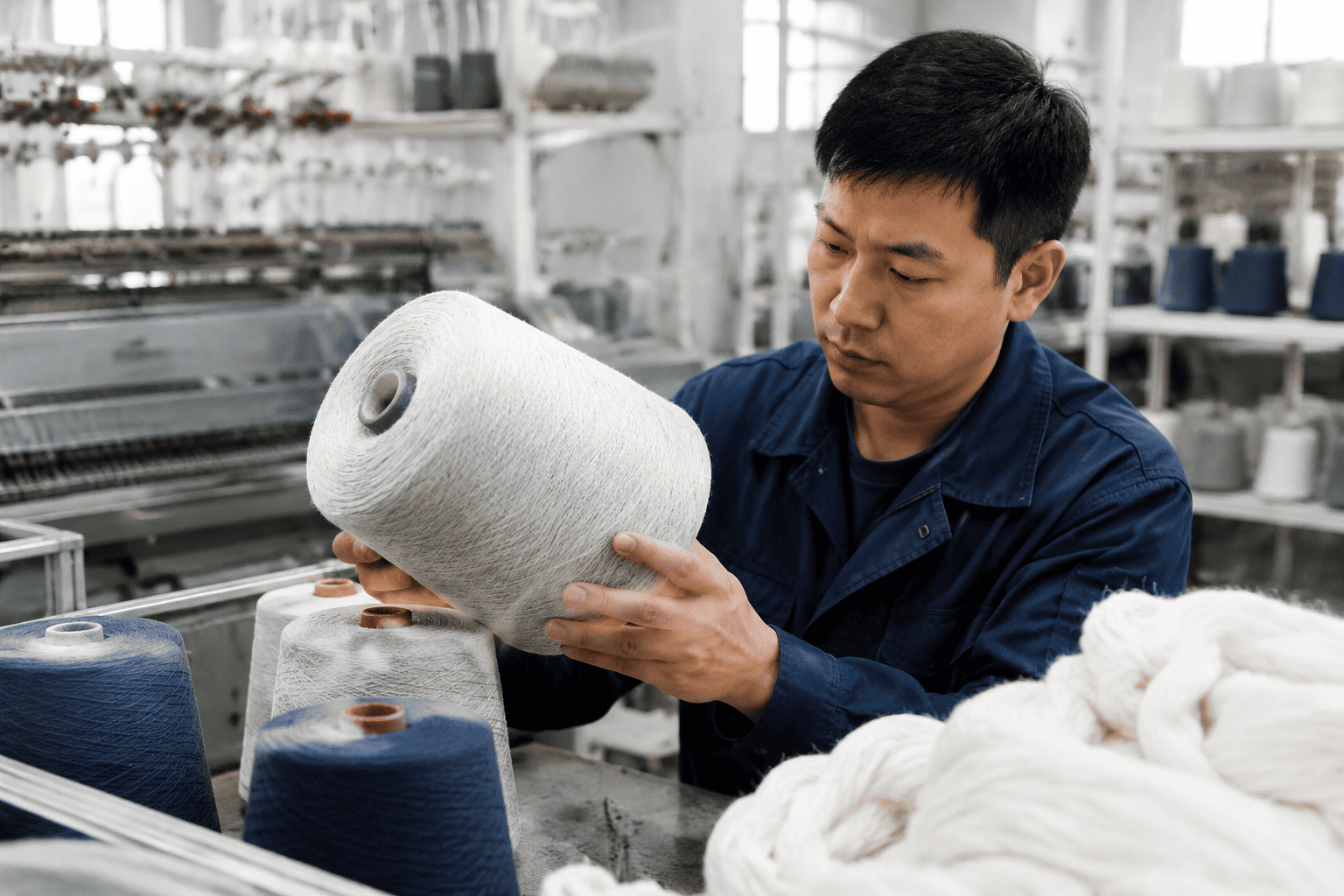
Many buyers are surprised to learn that even a standard material like 100% acrylic can vary hugely in price and quality. A client once asked me, "It's just acrylic, why is your price higher than another factory's?" The answer almost always comes down to where the yarn is from and who made it.
The Importance of Supplier Consistency
Not all yarn is created equal. We've seen it all. One supplier's acrylic might be soft and durable, while another's is scratchy and pills after one wash.7 This is why we build long-term relationships with a few trusted yarn mills. It ensures that the yarn we use for your bulk order has the same feel, color, and performance as the sample you approved. Sourcing from a random, cheaper supplier introduces a huge risk. You might save a few cents per beanie, but you could end up with a product that doesn't meet your customers' expectations. Consistency is crucial for brand building.
The Origin Factor
Where the yarn is produced also plays a role. Different regions have different standards for raw materials, spinning techniques, and quality control. This means that an acrylic yarn from one country might have better colorfastness or a softer touch than one from another. For natural fibers like wool or cashmere, the origin is even more critical, as the climate and animal breed directly impact the fiber's quality.8 We help our clients navigate these choices to find a material that delivers the right quality for their price point without sacrificing stability.
Surprised when the final cost of your beanies is higher than the initial quote? These hidden fees can wreck your profit margins. The culprits are often dyeing and order quantity.
Yes, hidden costs often come from dyeing and Minimum Order Quantities (MOQ). Special colors like heather grey or multi-tone yarns are more complex and expensive to produce than solid colors. Additionally, small orders that don't meet a yarn mill's MOQ may face surcharges.
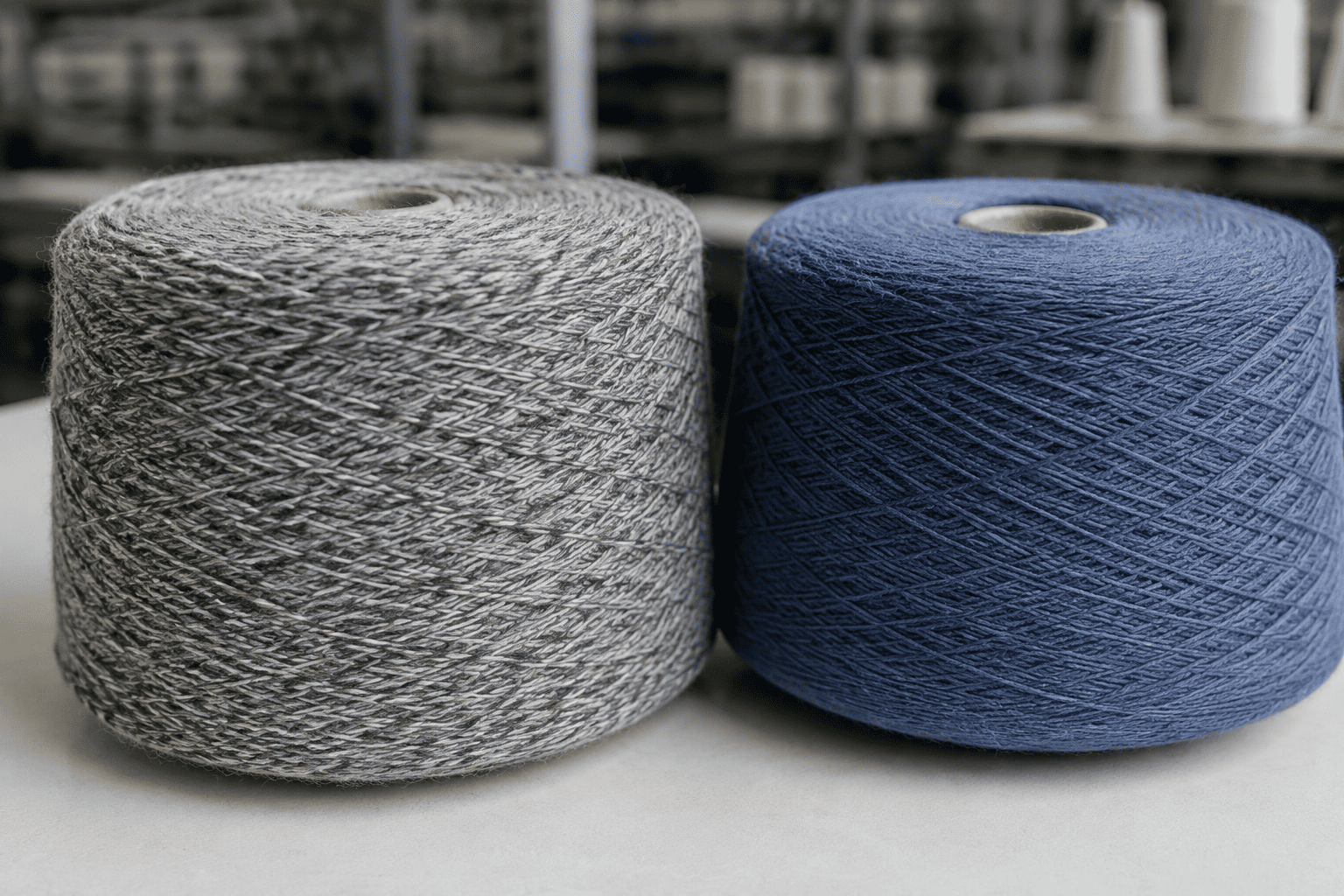
Beyond the fiber itself, the manufacturing processes associated with the yarn can add costs that are not always obvious upfront. Two of the biggest factors I discuss with my clients are the dyeing process and the Minimum Order Quantity, or MOQ.
The Cost of Color
Getting the color of your beanie just right is essential, but not all colors cost the same to produce. Standard solid colors are usually the most affordable.9 However, more complex colors add cost. For example, "heather grey" isn't made by dyeing yarn grey. It's made by spinning black and white fibers together before they even become yarn.10 This extra step costs more. The same is true for other mixed colors or space-dyed yarns that have multiple colors in a single strand.11 These specialty dyeing and spinning processes require more work and specialized machinery, which is reflected in the final yarn price.
Understanding Minimum Order Quantities (MOQ)
Yarn mills produce yarn in large batches. Each color requires a specific production run.12 Because of this, they have an MOQ for each color, which is often several hundred kilograms. If your beanie order is small and doesn't meet this MOQ, we have two options. We can either buy from a stockist who sells smaller quantities (but at a higher price), or we have to pay the mill a surcharge to produce a small batch just for you. This is why a small test order is often more expensive per piece than a large bulk order. Planning your quantities can help you avoid these extra costs and get the best possible price.
| Factor | Lower Cost Option | Higher Cost Option |
|---|---|---|
| Color Type | Solid, standard colors | Heather, space-dyed, custom colors |
| Order Size | Meets or exceeds yarn MOQ | Smaller than yarn MOQ |
How do I choose the right yarn for my brand's target market?
Struggling to choose a yarn for your beanies? Picking the wrong one can lead to unsold stock and a damaged brand image. The secret is matching the material to your specific market.
The right yarn depends entirely on your target market and price point. A luxury brand might choose a cashmere blend for its premium feel, while a promotional brand will prioritize the low cost of standard acrylic. The goal is to balance quality, feel, and cost to meet customer expectations.
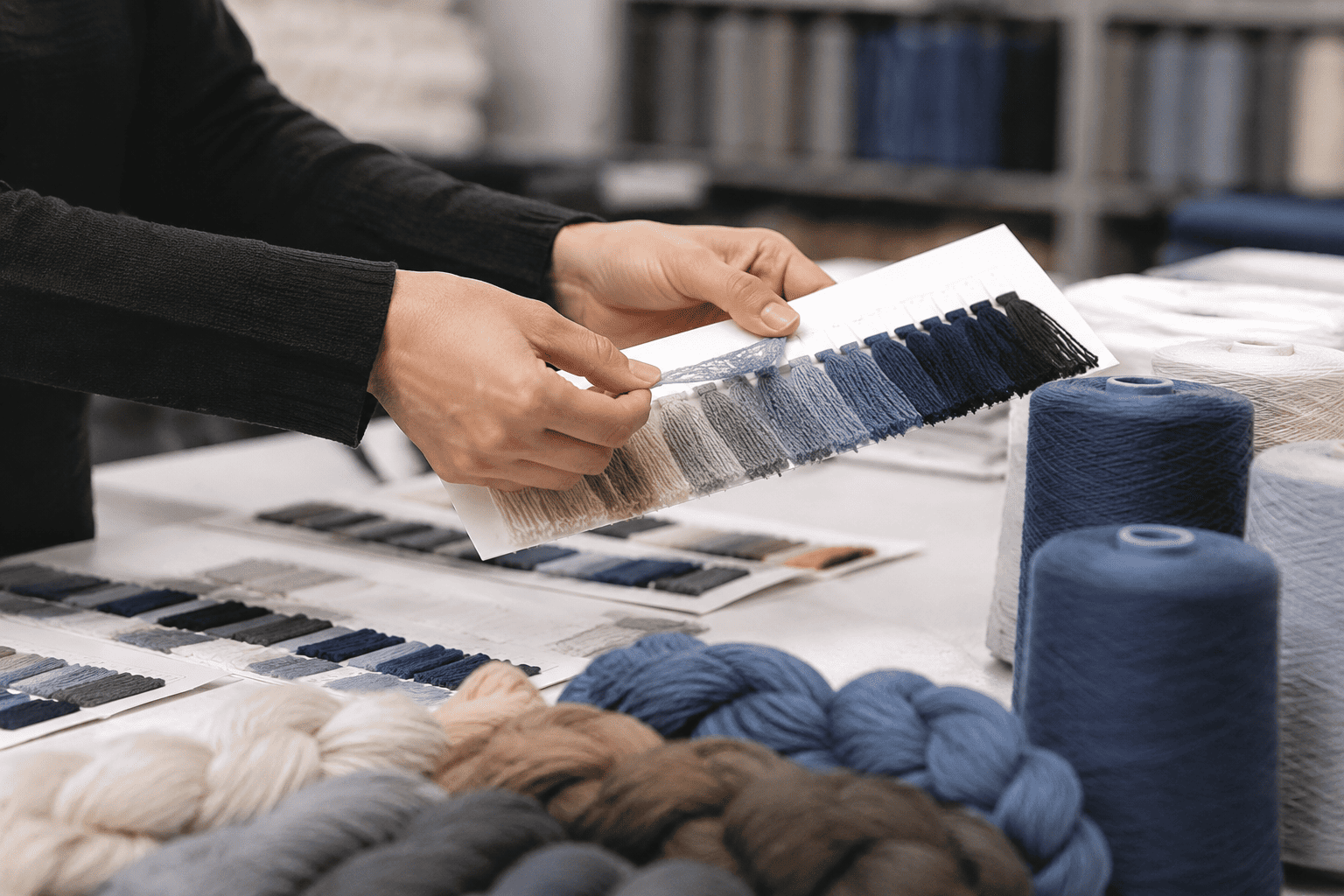
So, after all this, the most important question isn't "which yarn is best?" or "which yarn is cheapest?". The correct question I always encourage my clients to ask is: "Which yarn is right for my brand and my customer?" The answer is different for everyone. There is no single "best" material.
Aligning Yarn with Brand Identity
Your choice of yarn sends a message to your customer. It tells them what your brand stands for. A luxury fashion brand might opt for a merino wool or cashmere blend because their customers expect premium, natural materials and are willing to pay for them. A mid-tier retail brand might choose a soft acrylic or a wool/acrylic blend to offer a great hand-feel at an accessible price. And for a promotional giveaway, a standard, budget-friendly acrylic is often the perfect choice because the primary goal is brand exposure at a low cost per unit. The material has to serve your business strategy.
A Practical Approach to Selection
We help our clients work backward from their goals. We start by discussing their target retail price, the desired look and feel (e.g., chunky, soft, lightweight), and the primary use case. With that information, we can recommend a few yarn options that strike the perfect balance between their budget, design vision, and customer expectations. This collaborative approach ensures the final product is not only high quality but also commercially successful. It's about finding the sweet spot where cost and quality meet.
| Brand Type | Primary Goal | Likely Yarn Choice |
|---|---|---|
| Luxury Brand | Premium feel, exclusivity | Cashmere Blend, Merino Wool |
| Retail Brand | Balance of quality and price | Soft Acrylic, Wool/Acrylic Blend |
| Promotional Brand | Low cost, high volume | Standard 100% Acrylic |
Conclusion
In short, yarn choice is a strategic decision. Understanding content, source, and hidden costs allows you to perfectly balance quality and price, creating the ideal beanie for your specific market.
"[PDF] PDF", https://www2.cs.arizona.edu/patterns/weaving/monographs/dss_cost.pdf. A textile or apparel costing source identifies raw materials, including yarn or fabric, as a principal component of garment cost; this supports the article’s cost emphasis, although it may not provide a beanie-specific percentage. Evidence role: general_support; source type: education. Supports: Raw materials or fabric/yarn inputs are commonly treated as a major component in apparel costing models.. Scope note: Contextual support for apparel costing rather than direct beanie price data. ↩
"Units of textile measurement - Wikipedia", https://en.wikipedia.org/wiki/Units_of_textile_measurement. A textile engineering or yarn manufacturing reference explains that fiber composition, yarn count, and ply are core specifications affecting yarn properties and production requirements; this supports the stated cost drivers, although it does not quote market prices for angora beanie yarns. Evidence role: mechanism; source type: education. Supports: Fiber composition, yarn count or thickness, and ply are recognized yarn specifications that affect material use and manufacturing requirements.. Scope note: Mechanistic support rather than direct pricing evidence. ↩
"16 CFR Part 300 - Labeling - eCFR", https://www.ecfr.gov/current/title-16/chapter-I/subchapter-C/part-300/subject-group-ECFRdd744afeb60bdf7. Government textile-labeling rules require disclosure of fiber names and percentages for textile products, supporting the point that a phrase such as “Angora Blend” does not by itself specify whether the angora content is low or high. Evidence role: definition; source type: government. Supports: Textile labeling rules treat fiber percentages as the meaningful composition information for blended textiles, making a generic blend name insufficient by itself.. Scope note: Supports the need for percentage disclosure, but does not prove that sellers commonly use the phrase without percentages. ↩
"[PDF] Cost finding for textile mills - eGrove", https://egrove.olemiss.edu/cgi/viewcontent.cgi?article=1202&context=acct_corp. A textile manufacturing reference describes yarn count, twist, and ply as structural variables that influence spinning and yarn performance; this supports the claim that yarn structure can affect cost, although it does not calculate the cost effect for beanies. Evidence role: mechanism; source type: education. Supports: Yarn structure variables such as count, twist, and ply affect manufacturing processes and material characteristics.. Scope note: Technical mechanism support, not direct cost quantification. ↩
"Material and Structural Functionalization of Knitted Fabrics for ... - PMC", https://pmc.ncbi.nlm.nih.gov/articles/PMC9104909/. Studies of knitted fabric properties report relationships among yarn count, fabric mass or thickness, and thermal behavior; this supports the article’s statement about heavier yarn producing bulkier, warmer items, although it does not test beanies specifically. Evidence role: mechanism; source type: paper. Supports: In knitted fabrics, yarn count and fabric mass or thickness are associated with bulk and thermal properties, and heavier constructions consume more material.. Scope note: Based on knitted fabric studies rather than finished hat trials. ↩
"Elongation in Yarn: Key Quality Parameter in Textiles - LinkedIn", https://www.linkedin.com/posts/sakthi-tharan-0326b5239_textiletesting-yarntesting-spinningtechnology-activity-7437403591541317632-Cw6P. Textile quality-control references describe yarn and fabric testing for properties including strength, evenness, and colorfastness, supporting the claim that yarn sold under the same fiber name can differ in performance; the source may not compare named acrylic mills directly. Evidence role: general_support; source type: institution. Supports: Yarn quality is evaluated through measurable properties such as evenness, strength, elongation, and colorfastness, which can vary across production lots and suppliers.. Scope note: General textile quality support rather than a specific mill-to-mill acrylic comparison. ↩
"A Method for the Assessment of Textile Pilling Tendency Using ...", https://pmc.ncbi.nlm.nih.gov/articles/PMC7374317/. Research on pilling in knitted fabrics shows that fiber, yarn, and fabric variables influence pilling resistance and surface appearance; this supports the plausibility of supplier-related acrylic quality differences, although it does not document the specific “one wash” outcome. Evidence role: mechanism; source type: paper. Supports: Pilling and handle in knitted textiles are influenced by fiber, yarn, and fabric parameters, so acrylic products can differ in perceived quality and durability.. Scope note: Supports the mechanism behind pilling variation, not the exact anecdotal scenario. ↩
"The science behind the wool industry. The importance and value of ...", https://pmc.ncbi.nlm.nih.gov/articles/PMC8127695/. Animal-fiber research reports that breed and environmental conditions influence wool or cashmere traits such as fiber diameter, length, and yield; this supports the article’s origin-quality link, although it does not rank every producing region. Evidence role: mechanism; source type: paper. Supports: Breed and environmental conditions affect natural animal-fiber traits such as fiber diameter, length, yield, and quality.. Scope note: General animal-fiber evidence rather than a region-by-region sourcing guide. ↩
"Yarn Dyeing Vs Fabric Dyeing | 9 Criteria for Choice - VieTextile", https://vietextile.com/en/yarn-dyeing-vs-fabric-dyeing/. Textile coloration references explain that dyeing cost depends on processing route, setup, and complexity; this supports the claim that standard solid colors are typically cheaper than specialty effects, although actual prices vary by mill, dye class, and order volume. Evidence role: mechanism; source type: education. Supports: Textile coloration costs depend on process complexity, dyeing route, and production setup, making simpler solid shades generally less complex than specialty effects.. Scope note: Process-based support rather than a universal price list. ↩
"Mélange Yarn – an Overview - Academia.edu", https://www.academia.edu/81837955/M%C3%A9lange_Yarn_an_Overview. Textile references define heather or mélange yarn as yarn made by blending differently colored fibers before spinning, supporting the article’s explanation of heather grey construction; this does not mean every grey yarn is produced by that method. Evidence role: definition; source type: education. Supports: Heather or mélange yarns are produced by blending fibers of different colors before spinning to create a mixed-color appearance.. Scope note: Defines the common heather process but does not cover all grey-yarn production methods. ↩
"Understanding Space-Dyed Rug Fibers: Multi-Tonal Yarn Explained", https://discount-rug.com/blogs/news/understanding-space-dyed-rug-fibers-multi-tonal-yarn-explained?srsltid=AfmBOoq9sYE6okTnW6nlQ28X5DvXf_AZTv_iJrc-ES-8l6HOw56sPWQ3. Textile dyeing references describe space-dyed yarn as yarn colored in different sections along its length, supporting the statement that a single strand can contain multiple colors. Evidence role: definition; source type: education. Supports: Space dyeing is a yarn coloration method that applies different colors at intervals along the yarn length.. ↩
"Rayon Blended Yarn MOQ Negotiation for Garment Factories", https://szoneierfabrics.com/rayon-blended-yarn-moq-negotiation-strategies-for-garment-factories/. Textile manufacturing and dyeing references describe yarn processing in lots or batches and note that color changes involve separate dyeing or production control, supporting the article’s explanation of color-specific production runs; the source may not specify the exact MOQ used by individual mills. Evidence role: mechanism; source type: institution. Supports: Yarn production and dyeing are commonly organized in lots or batches, with color changes requiring separate setup, dyeing, or lot control.. Scope note: Supports the production logic but not a universal MOQ threshold. ↩