
Are you struggling to pick the right yarn for your hats? Choosing wrong leads to poor quality and unhappy customers. We can help you understand the options for your brand.
The right material affects everything from feel and warmth to how the hat holds its shape after washing.1 Some materials, like acrylic, are stable, while others, like core-spun yarn, become softer but may pill faster.2 Understanding these differences is key to a successful product.
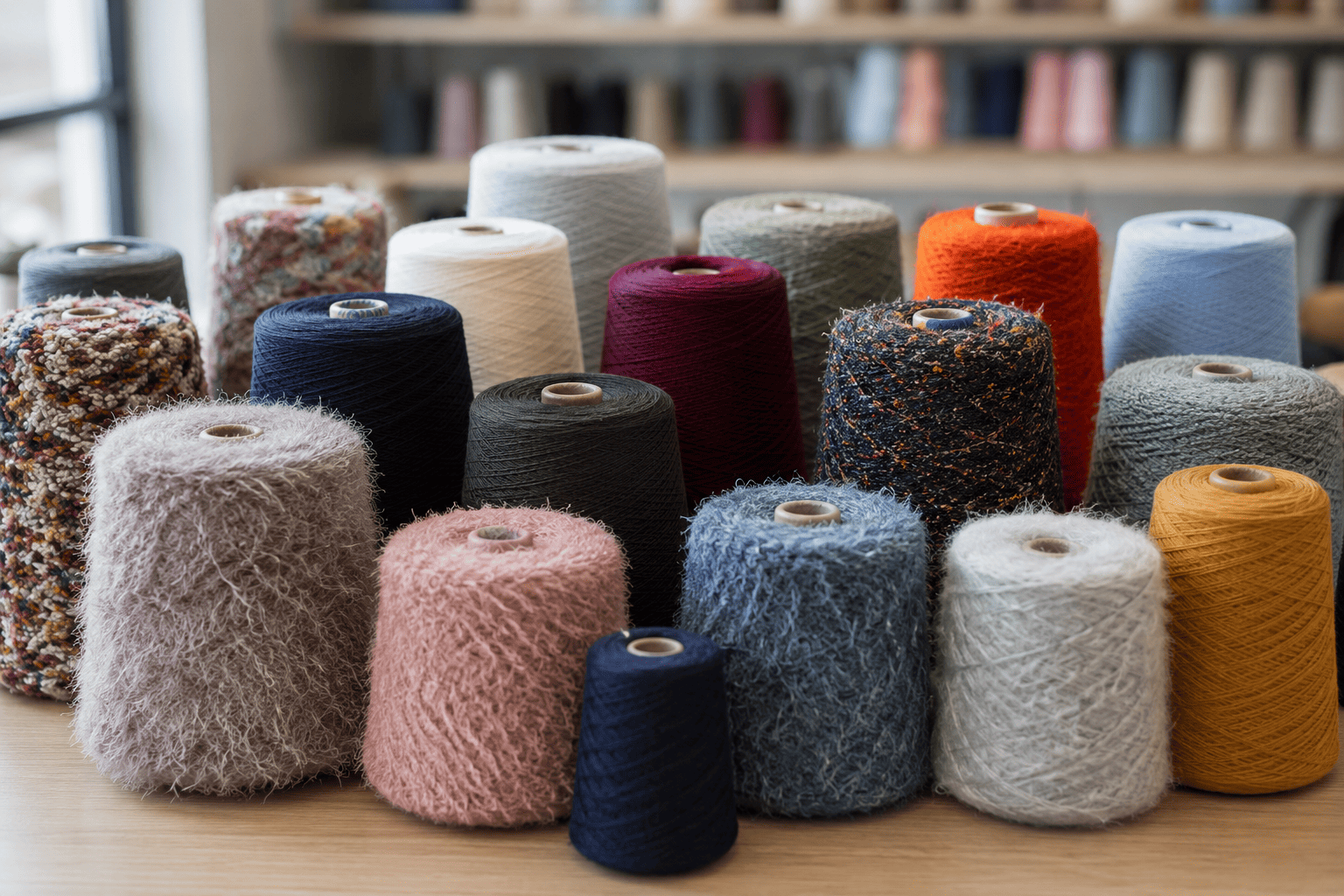
Choosing a material is one of the first and most important decisions in hat manufacturing. I remember when I first started, I thought yarn was just yarn. I quickly learned that it's a science. The wrong choice can ruin a whole production run, while the right one can make your product stand out. It’s about more than just color; it’s about performance, feel, and how the hat will behave over its entire life. Let’s explore some of these key differences to help you make a better choice.
Why Do Some Hat Materials Deform While Others Improve With Washing?
Worried your hats will lose their shape after washing? Some materials deform easily, disappointing customers. Let’s explore yarns that get better with washing and ironing, ensuring a quality product.
Materials like acrylic and polyester can deform with excess water and heat.3 However, yarns like wool, cashmere, and core-spun yarn become much softer after washing.4 Ironing then sets them into a perfect, crisp shape, improving the final product's feel and appearance.
Understanding Material Reactions to Post-Production Treatment
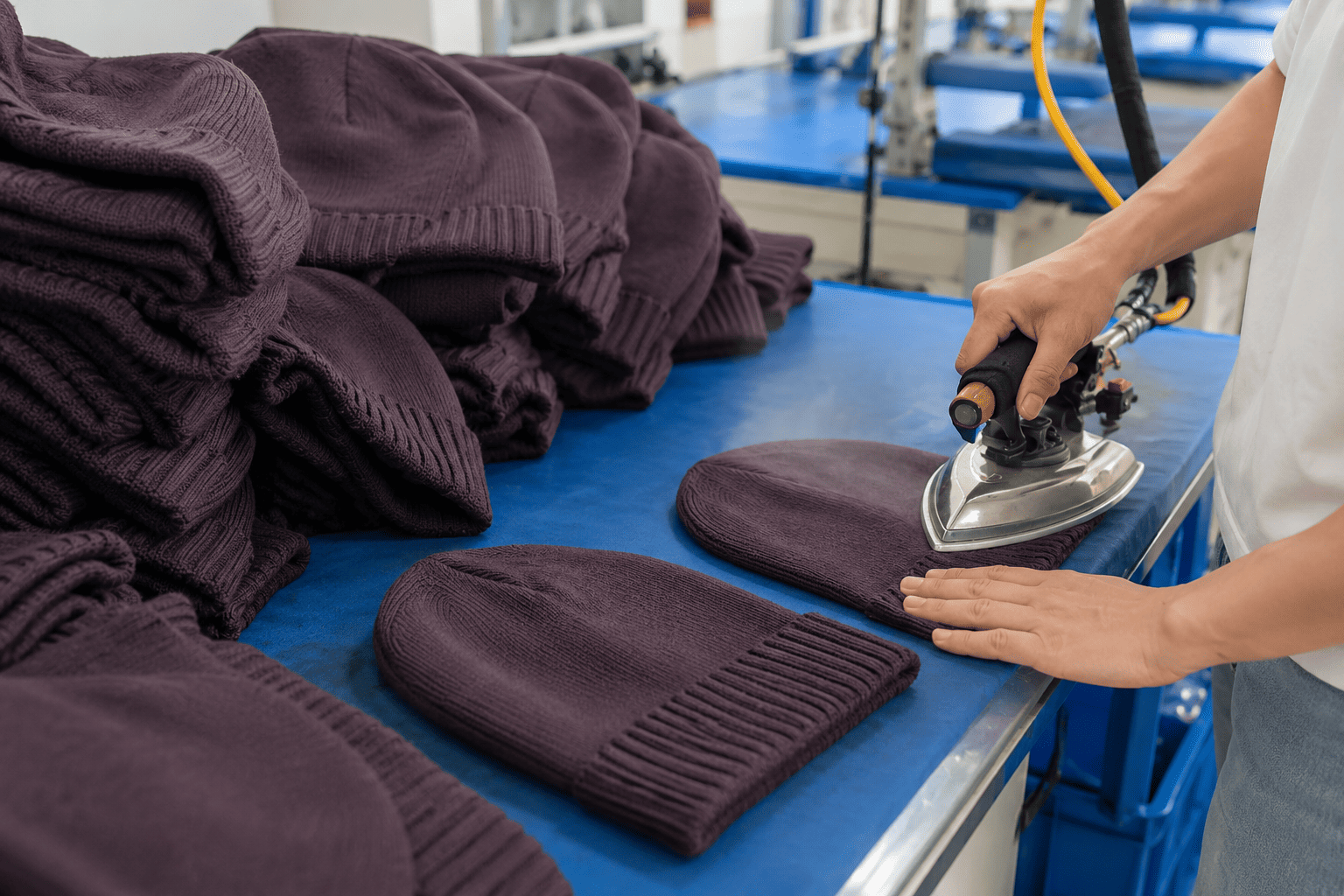
In our factory, "finishing" is a critical step that involves washing and ironing the hats. This process can make or break the final product depending on the material used. Some yarns, especially synthetics like acrylic or polyester, don't react well. The heat and water can cause them to stretch, shrink, or lose their intended shape permanently. We generally avoid this process for 100% acrylic hats to maintain their structure.
On the other hand, many natural and blended fibers thrive with this treatment. When we wash a hat made from wool, cashmere, or rabbit fur blends, the fibers "bloom."5 This means they relax and expand, making the entire hat feel incredibly soft and luxurious. The initial yarn might feel a bit rough, but the wash transforms it. After washing, we carefully iron the hats. This step doesn't just dry them; it sets the knit pattern, creates a clean shape, and gives the hat a professional, well-structured look.6 This two-step process allows us to deliver a product that is both soft to the touch and visually perfect.
| Material | Reaction to Washing/Ironing | Best For... |
|---|---|---|
| Acrylic/Polyester | Can deform, loses shape | Stable, no-wash designs where consistency is key. |
| Wool/Cashmere | Softens significantly, fibers bloom | Premium, high-end hats where a soft feel is paramount. |
| Core-Spun Yarn | Becomes extremely soft | Hats where the primary goal is a very soft touch. |
| Rabbit/Mohair Blends | Becomes softer and "hairier" | Textured, fluffy hats with a premium feel. |
How Do You Choose a Material That Balances Cost, Feel, and Appearance?
Finding a material that's warm, looks substantial, feels soft, and is affordable feels impossible. This balancing act is frustrating. We helped a client achieve this exact goal with our expertise.
For a Russian client needing warmth, a thick look, and a soft feel at a good price, we recommended a specific blend. We chose a yarn that benefits from washing and ironing. This process made the hat feel soft and look substantial and firm.
A Case Study: Meeting the Russian Market's Demands
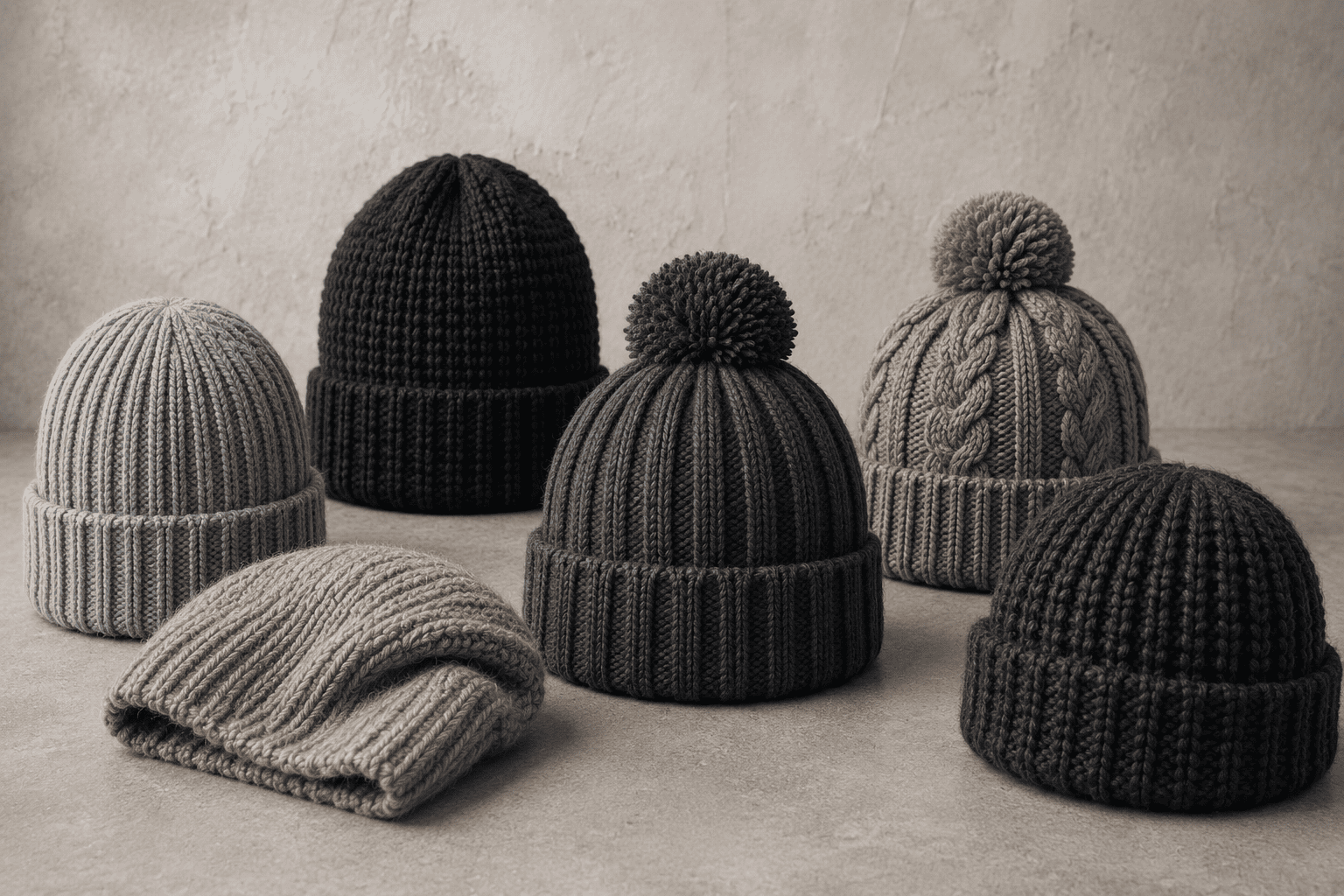
A while ago, a client from Russia came to us with a very specific request. Their market demands hats that can handle harsh winters.7 This meant the product had to check several boxes, and a failure in any one area would mean no sales. First, the hat had to be exceptionally warm. Second, it needed to look warm and sturdy; it had to have a thick, firm appearance that communicated quality. Third, it had to feel soft to the touch, as end customers often judge quality by feel. Finally, it needed to be affordable to be competitive.
This is a classic challenge. Usually, a very soft, thick, and warm hat means using expensive materials like pure cashmere.8 But that wouldn't meet the client's price point. We looked at the problem from a different angle. Instead of relying only on the raw material, we focused on what our finishing process could achieve. We recommended a specific blended yarn that was cost-effective but had properties that would be enhanced by washing and ironing. The washing process made the yarn bloom, creating a much softer feel. The subsequent ironing process gave the hat the firm, structured shape the client wanted. The result was a hat that looked thick and premium, felt incredibly soft, provided excellent warmth, and was produced at a great price. The client was thrilled, and the hats sold very well in their market.
Why Would a Client Switch From a Softer Yarn to a More Standard One?
Your super-soft hats are getting complaints about pilling too quickly. This damages your brand's reputation for quality. One of our clients faced this and made a smart switch based on feedback.
A Korean client initially chose core-spun yarn for its incredible softness after washing. However, this process also made it pill faster. For their next order, they switched to acrylic, which doesn't require washing, delaying the onset of pilling and improving long-term durability.
The Pilling Dilemma: Softness vs. Durability
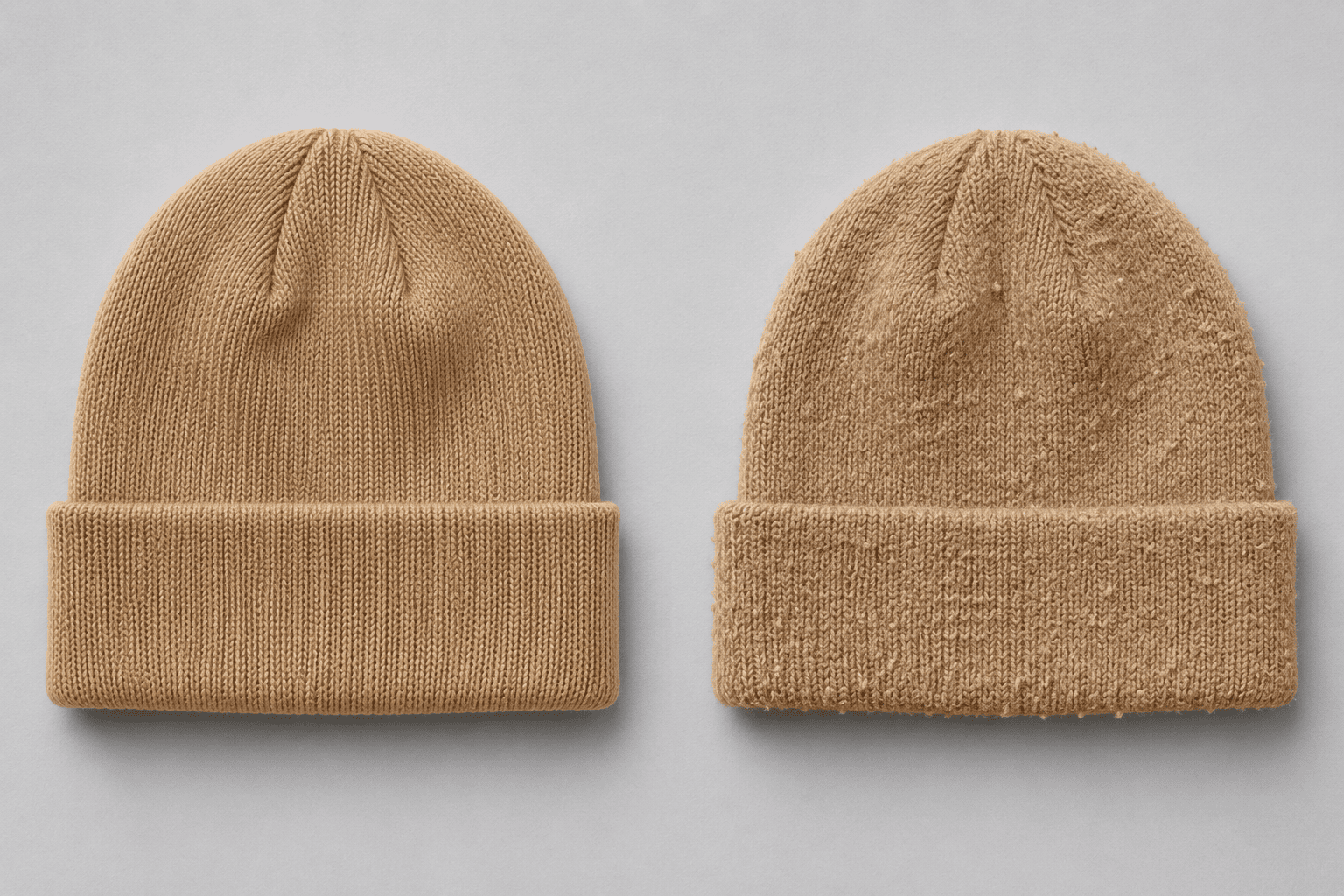
We worked with a client from South Korea who wanted to create the softest beanies possible for their first collection. We suggested a core-spun yarn. As expected, after our washing and finishing process, the hats were unbelievably soft and had a great feel. The initial launch was a success. However, after a few months, the client came back to us with some customer feedback. While everyone loved the initial softness, the hats were pilling more quickly than expected.
Pilling happens when short fibers in the yarn come loose and tangle together into little balls on the surface.9 The washing process that made the core-spun yarn so soft also relaxed the fibers, making them more susceptible to this friction.10 For their second order, the client wanted to address this. We discussed the trade-offs. We could switch to 100% acrylic yarn. Acrylic doesn't need a washing step to feel good, so the fibers remain more tightly bound. This means it takes much longer for pilling to become noticeable.11 The client decided that long-term appearance and durability were more important for their brand's reputation than the initial super-soft feel. They made the switch to acrylic, and the customer complaints about pilling stopped. It was a strategic decision to prioritize a different aspect of quality.
Can the Same Yarn Create a Completely Different Look on Two Hats?
You ordered hats made with a beautiful, hairy yarn, but the final product looks flat. The material doesn't pop as you expected. The knitting style might be the problem.
Yes, the knitting gauge dramatically changes a yarn's appearance. For example, we used the exact same batch of rabbit fur yarn on two different hat styles. The hat made with a looser 3-gauge knit looked much hairier and thicker than the one with a tighter 5/7-gauge knit.
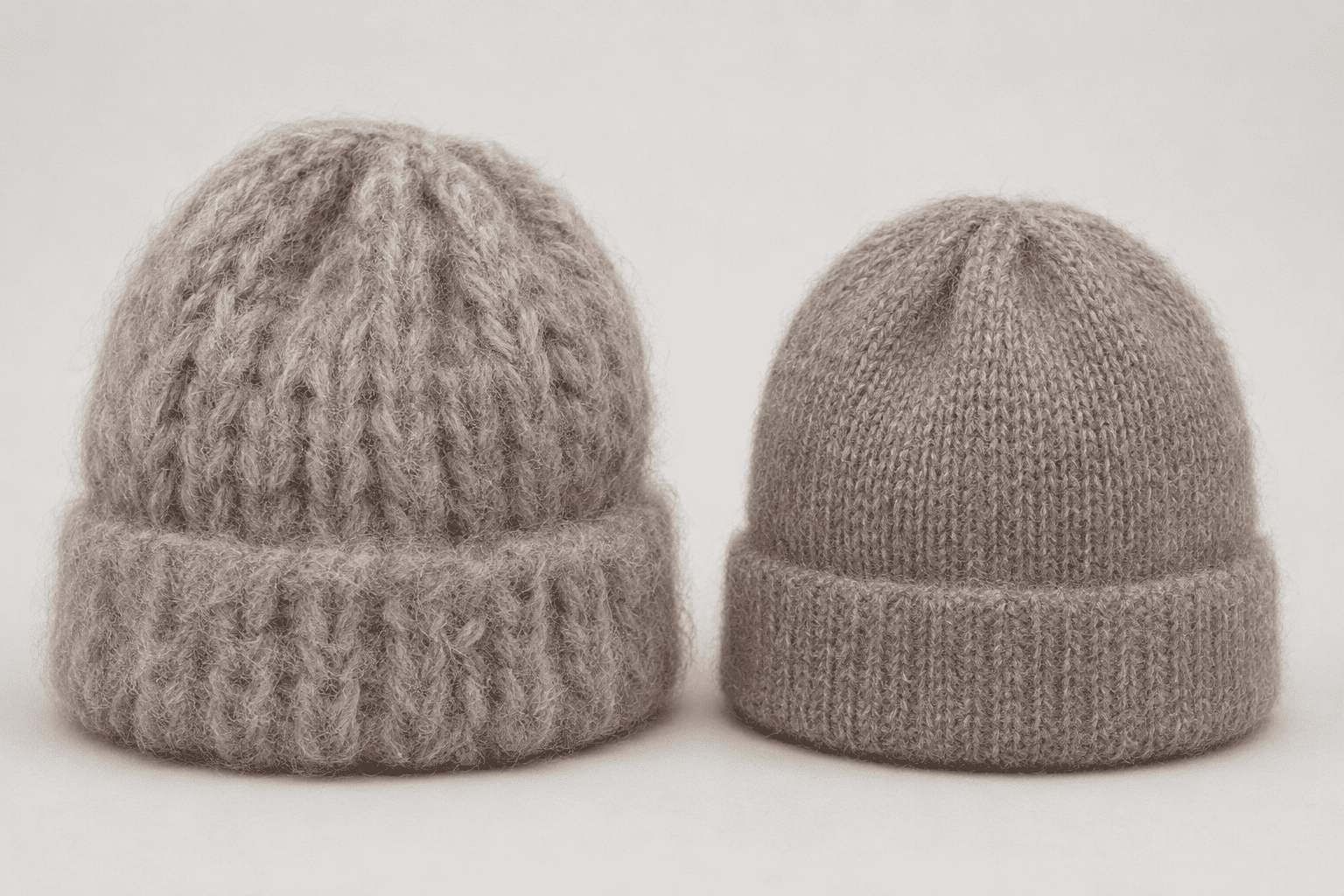
How Knitting Gauge Affects Yarn Expression
This is a detail that often surprises our new clients. The final look of a hat isn't just about the yarn; it's about the marriage between the yarn and the way it's knitted. The "gauge" of a knit refers to how many stitches fit into an inch.12 A lower gauge number, like a 3-gauge knit, means the stitches are larger and looser. A higher number, like a 7-gauge knit, means the stitches are smaller and tighter.
We once used the exact same batch of rabbit fur blend yarn for two different orders. One hat was a 3-gauge design, and the other was a 7-gauge design. When the samples were finished, they looked like they were made from completely different materials. The 3-gauge hat was incredibly fluffy and hairy. The loose knit gave the rabbit fibers plenty of space to bloom and stick out, creating a very rich, textured, and full appearance. The 7-gauge hat, by contrast, looked much flatter. The tight stitches trapped the hairy fibers, preventing them from creating that fluffy halo. The focus was more on the stitch pattern itself. Both hats were beautiful, but they had completely different aesthetics. This shows how crucial it is to consider the knitting style when choosing a textured or "hairy" yarn like mohair or rabbit fur to ensure you achieve the effect you're looking for.
Conclusion
Choosing the right hat material is about balancing feel, look, performance, and cost. Understanding these trade-offs ensures you create a product that your customers will truly love.
"[PDF] Performance Properties in Fibers and Fabrics - District 2 4-H", https://d24-h.tamu.edu/files/2023/02/D2D-Performance-Properties-in-Fibers-and-Fabrics-Copy.pdf. Textile-science references describe fiber composition as a determinant of hand, thermal insulation, and dimensional stability during laundering, supporting the article’s general claim that yarn choice affects comfort, warmth, and post-wash shape. Evidence role: general_support; source type: education. Supports: Different textile fibers have different tactile, thermal, and laundering-performance characteristics.. Scope note: The source would support the general relationship between fiber type and performance, not the performance of the article’s specific hat products. ↩
"Evaluation of the impact of cotton sheath linear density of core spun ...", https://pmc.ncbi.nlm.nih.gov/articles/PMC9344022/. Studies of textile pilling and yarn structure report that fiber properties and yarn construction affect surface fuzz formation, abrasion response, and perceived softness, providing contextual support for the comparison between acrylic stability and the pilling risk of softer spun constructions. Evidence role: general_support; source type: paper. Supports: Fiber type and yarn structure influence softness, dimensional stability, and pilling behavior.. Scope note: The source may not evaluate the exact core-spun yarn blend used in the article. ↩
"[PDF] Performance Properties in Fibers and Fabrics - District 2 4-H", https://d24-h.tamu.edu/files/2023/02/D2D-Performance-Properties-in-Fibers-and-Fabrics-Copy.pdf. Textile-materials references identify acrylic and polyester as thermoplastic fibers whose shape and dimensions can be affected by heat during care or finishing, supporting the warning that excessive heat and wet processing may deform synthetic knit hats. Evidence role: mechanism; source type: education. Supports: Synthetic fibers such as acrylic and polyester are thermoplastic and can change dimensions or shape when exposed to heat.. Scope note: The degree of deformation depends on yarn construction, knit structure, temperature, and finishing conditions. ↩
"Cachet of Cashmere: Complying with the Wool Products Labeling Act", https://www.ftc.gov/business-guidance/resources/cachet-cashmere-complying-wool-products-labeling-act. Research on wool and cashmere finishing shows that wet processing can change fiber surface behavior and fabric hand, offering support for the claim that washing may increase perceived softness in animal-fiber knitwear. Evidence role: mechanism; source type: paper. Supports: Wet finishing and laundering can alter fiber arrangement, surface feel, and perceived softness in animal-fiber textiles.. Scope note: The source would support wool and cashmere more directly than unspecified core-spun yarns, whose response depends on their fiber blend and construction. ↩
"what does it mean that the wool "blooms" (or not) upon washing ...", https://www.facebook.com/groups/knittingmadeeasy/posts/1626732845294218/. Textile-finishing literature describes wet finishing of animal-fiber knitwear as a process that can relax yarns and raise surface fibers, a mechanism consistent with the industry term 'bloom' used for fuller and softer fabric surfaces. Evidence role: definition; source type: research. Supports: Wet finishing can loosen and raise animal fibers in knitwear, producing a fuller or softer surface commonly described as blooming.. Scope note: The source may describe the mechanism without using the exact commercial term 'bloom' for every listed fiber. ↩
"(DOC) Mill Finishing - notes - Academia.edu", https://www.academia.edu/42338033/Mill_Finishing_notes. Textile-manufacturing sources describe pressing and steaming as knitwear finishing operations used to smooth fabric, stabilize dimensions, and improve garment shape, supporting the article’s statement that ironing helps set the knit pattern and final appearance. Evidence role: mechanism; source type: education. Supports: Pressing is a recognized knitwear finishing step used to stabilize dimensions, smooth the fabric, and improve garment appearance.. Scope note: Specific results vary with fiber type, steam or heat level, equipment, and operator technique. ↩
"Russian Federation - Climatology (CRU)", https://climateknowledgeportal.worldbank.org/country/russian-federation/climate-data-historical. Official climate data for Russia document prolonged cold winter conditions across many regions, providing contextual support for the article’s claim that hats sold for that market must be suitable for harsh winters. Evidence role: historical_context; source type: government. Supports: Large parts of Russia experience very cold winter conditions, creating a plausible need for warm winter headwear.. Scope note: Climate data support environmental need, not direct consumer demand or sales behavior. ↩
"Cashmere wool - Wikipedia", https://en.wikipedia.org/wiki/Cashmere_wool. Reference works on cashmere describe it as a fine animal fiber valued for softness, warmth, and relative scarcity, supporting the article’s characterization of pure cashmere as a premium material for warm knitwear. Evidence role: general_support; source type: encyclopedia. Supports: Cashmere is widely described as a fine, soft, insulating, and high-value animal fiber.. Scope note: The source supports cashmere’s general premium status and properties, not the cost structure of any particular hat order. ↩
"Pill (textile) - Wikipedia", https://en.wikipedia.org/wiki/Pill_(textile). Textile pilling studies define pills as entangled fiber clusters formed when surface fibers are loosened by wear and abrasion, directly supporting the article’s explanation of how small balls form on knitted fabric. Evidence role: mechanism; source type: paper. Supports: Fabric pilling is caused by fiber protrusion, entanglement, and abrasion on the textile surface.. ↩
"Sustainable and cleaner production of elastic core-spun yarns for ...", https://pmc.ncbi.nlm.nih.gov/articles/PMC10875377/. Research on pilling in knitted fabrics links fiber looseness, abrasion, and surface fiber protrusion to pill formation, providing mechanistic support for the claim that a softening wash may also increase susceptibility to friction-related pilling. Evidence role: mechanism; source type: paper. Supports: Wet processing and abrasion can influence fiber protrusion and pilling behavior in knitted fabrics.. Scope note: The source would support the mechanism generally; direct proof would require testing the same core-spun yarn and finishing process. ↩
"What Is Pilling? | How to Stop Fabrics From Pilling - Swavelle Group", https://www.swavelle.com/in-the-news/what-is-pilling/. Studies of knitted-fabric pilling report that fiber composition, yarn structure, twist or cohesion, and finishing conditions influence how quickly pills become visible, offering contextual support for the article’s claim that a less-relaxed acrylic construction can delay noticeable pilling. Evidence role: general_support; source type: paper. Supports: Pilling resistance is affected by fiber type, yarn tightness, finishing, and abrasion exposure.. Scope note: The claim is comparative and product-specific; a citation can support the relevant factors but not prove the exact outcome without controlled testing. ↩
"Knitting - Wikipedia", https://en.wikipedia.org/wiki/Knitting. Knitting references define gauge as the number of stitches, and often rows, per unit length in a knitted fabric, directly supporting the article’s explanation that gauge measures stitch density. Evidence role: definition; source type: encyclopedia. Supports: Knitting gauge is defined by the number of stitches per unit length.. ↩