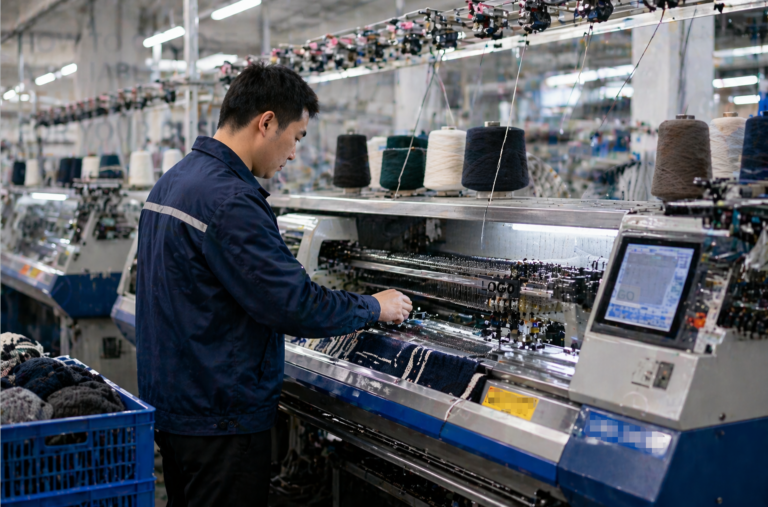

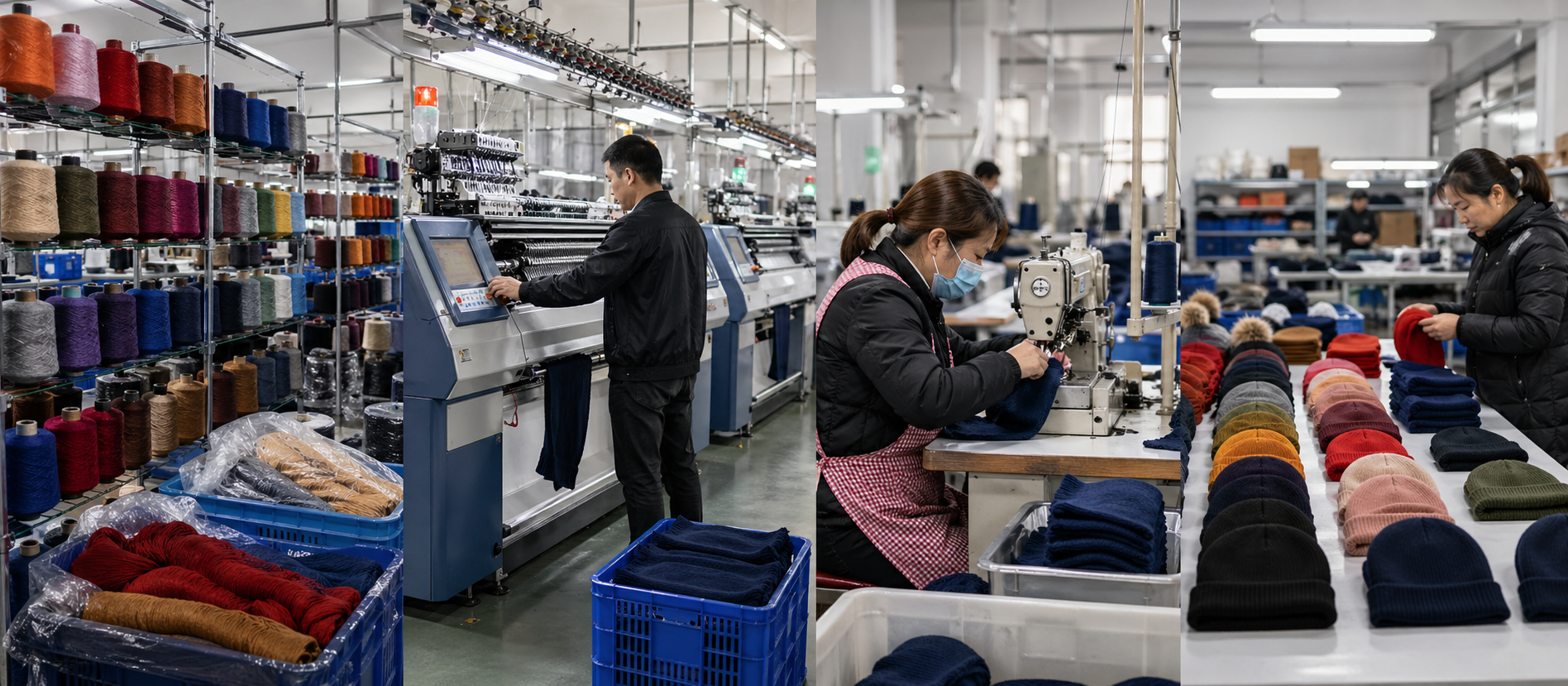
What Does the Beanie Manufacturing Process Really Look Like?
Thinking about how a beanie is made? It may seem simple: yarn, a knitting machine, and a finished hat. But in real bulk production, even a small error can affect a large batch, creating rework risk and possible delivery delays.1
Manufacturing beanies is a detailed risk-control process. It starts with confirming samples and materials, not just with knitting. Each step, from sourcing yarn to final packing, needs clear checks to help keep the bulk order aligned with the approved sample and agreed requirements.
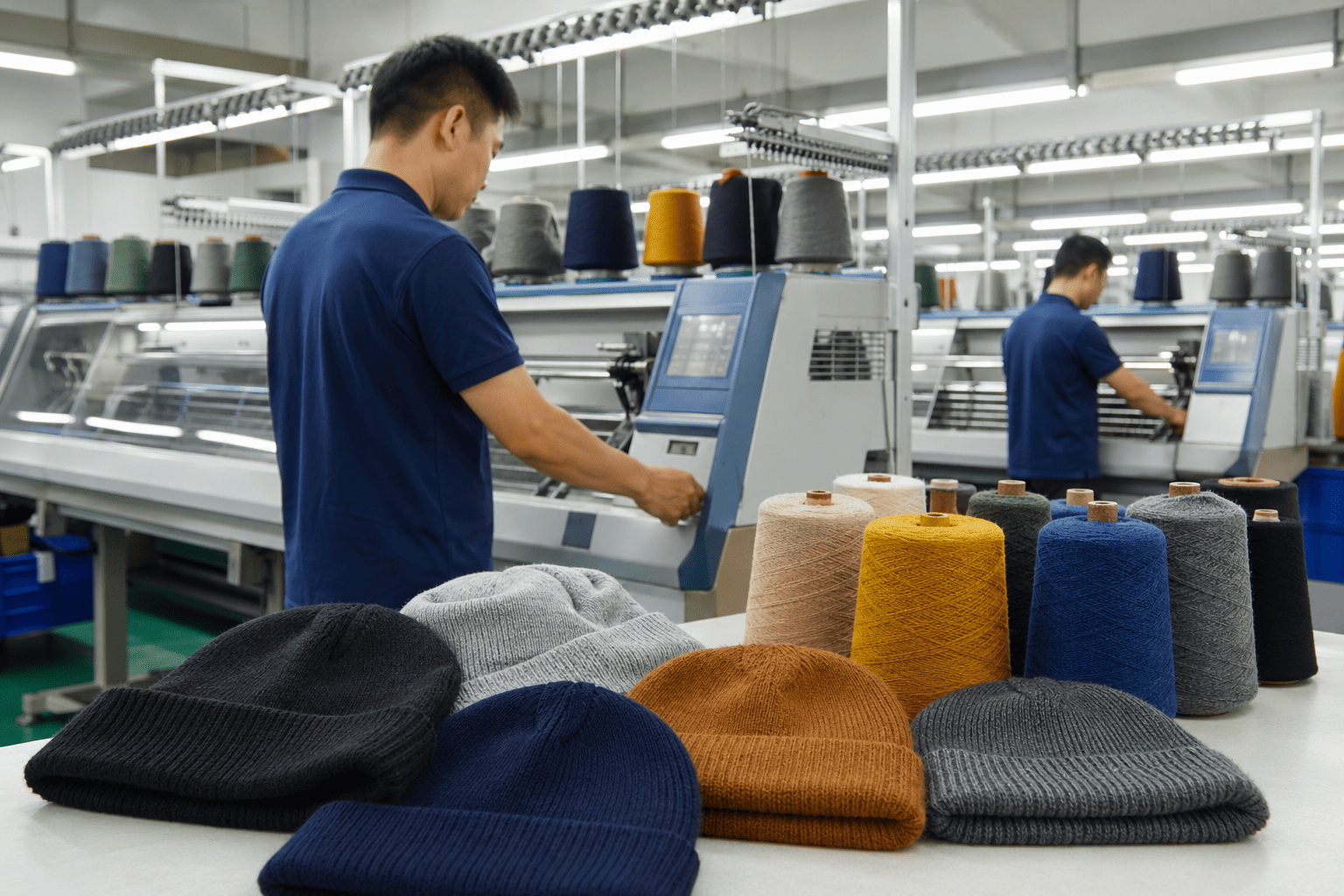
Many people think the process starts when the knitting machine turns on. But that is not the whole story. The real work begins much earlier, because clear confirmation before production helps reduce misunderstanding, rework, and quality risk.2
Why does pre-production planning matter so much?
Jumping straight into production may seem fast. But without clear plans, you risk getting products that do not match your design, market positioning, or packing requirements. This can create extra adjustments before shipment.
Pre-production planning is important because the approved pre-production sample becomes the reference for bulk production.3 In apparel production, a PP sample should correspond to the bulk order in fabric, accessories, print, and other details. For knitted hats, this means confirming materials, colors, size, shape, logo method, labels, and packing before bulk production starts.
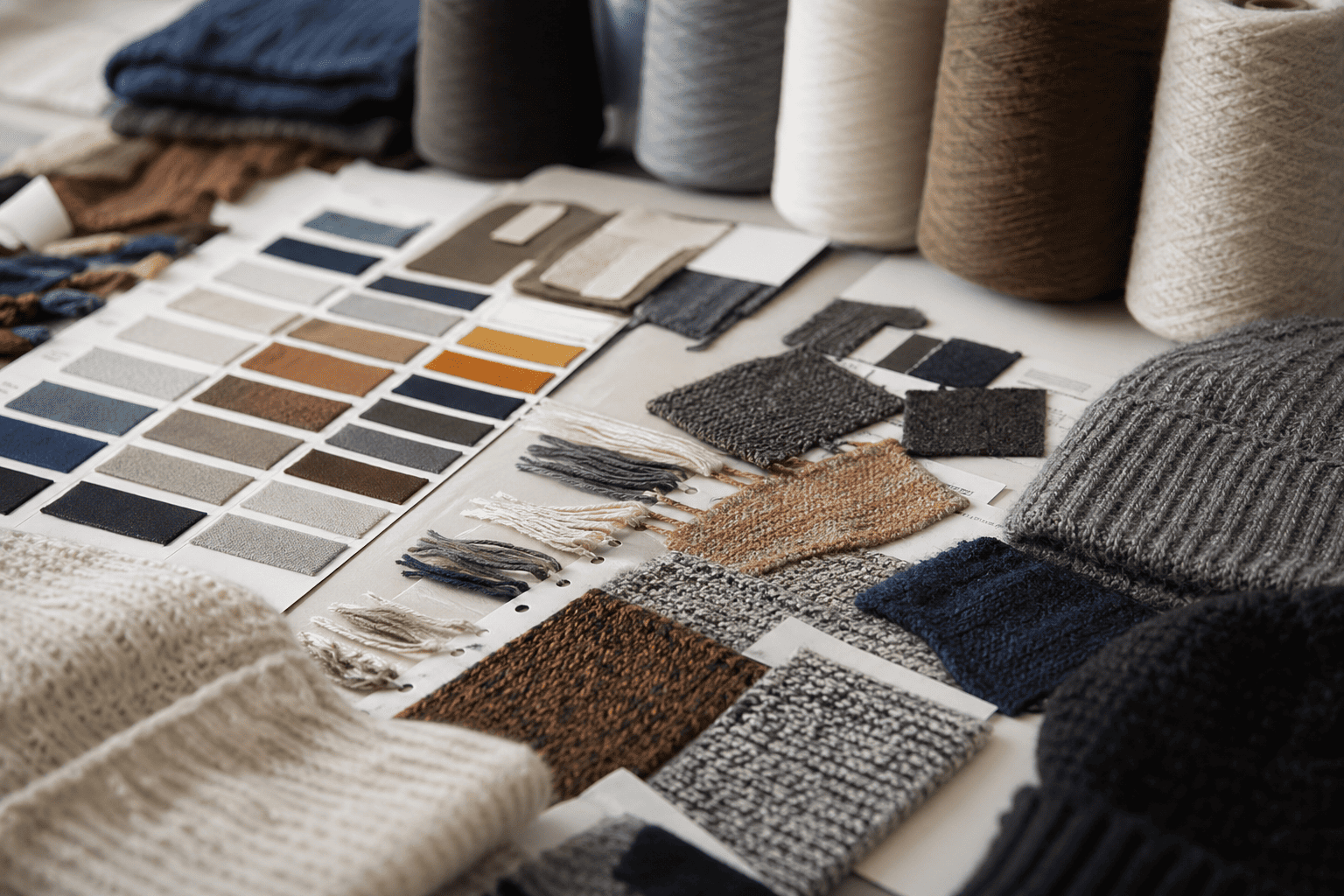
The success of a bulk order is often decided before the first machine starts running. It is all about detailed confirmation. To reduce surprises, we create or confirm a master sample based on a complete checklist of the buyer's requirements. This sample becomes the standard we use to compare bulk production.
The Master Confirmation Checklist
| Item to Confirm | Why It Matters |
|---|---|
| Material | Helps confirm the expected hand feel, stretch, warmth, and quality level. |
| Color | Helps match the buyer's color requirement or Pantone reference. |
| Size | Helps keep the fit consistent across the order. |
| Hat Shape | Defines the final style, such as cuffed, classic, slouchy, or pom-pom beanie. |
| Logo | Confirms the method, placement, size, color, and final appearance. |
| Labels | Includes brand labels, care labels, origin labels, and other required trims. |
| Packing | Confirms units per polybag, carton quantity, and export packing requirements. |
How does yarn quality affect the final beanie?
At first glance, all acrylic yarn may seem similar. But in production, yarn quality and batch stability can affect the final look, touch, size, and consistency of the beanie.4
Yarn quality is the foundation of a good beanie. Yarn testing can include properties such as shrinkage under hot air or boiling water, which shows why material stability matters before production. If the yarn batch is unstable, it may increase the risk of uneven color, pilling, inconsistent sizing, or surface irregularities in the final knitted product.
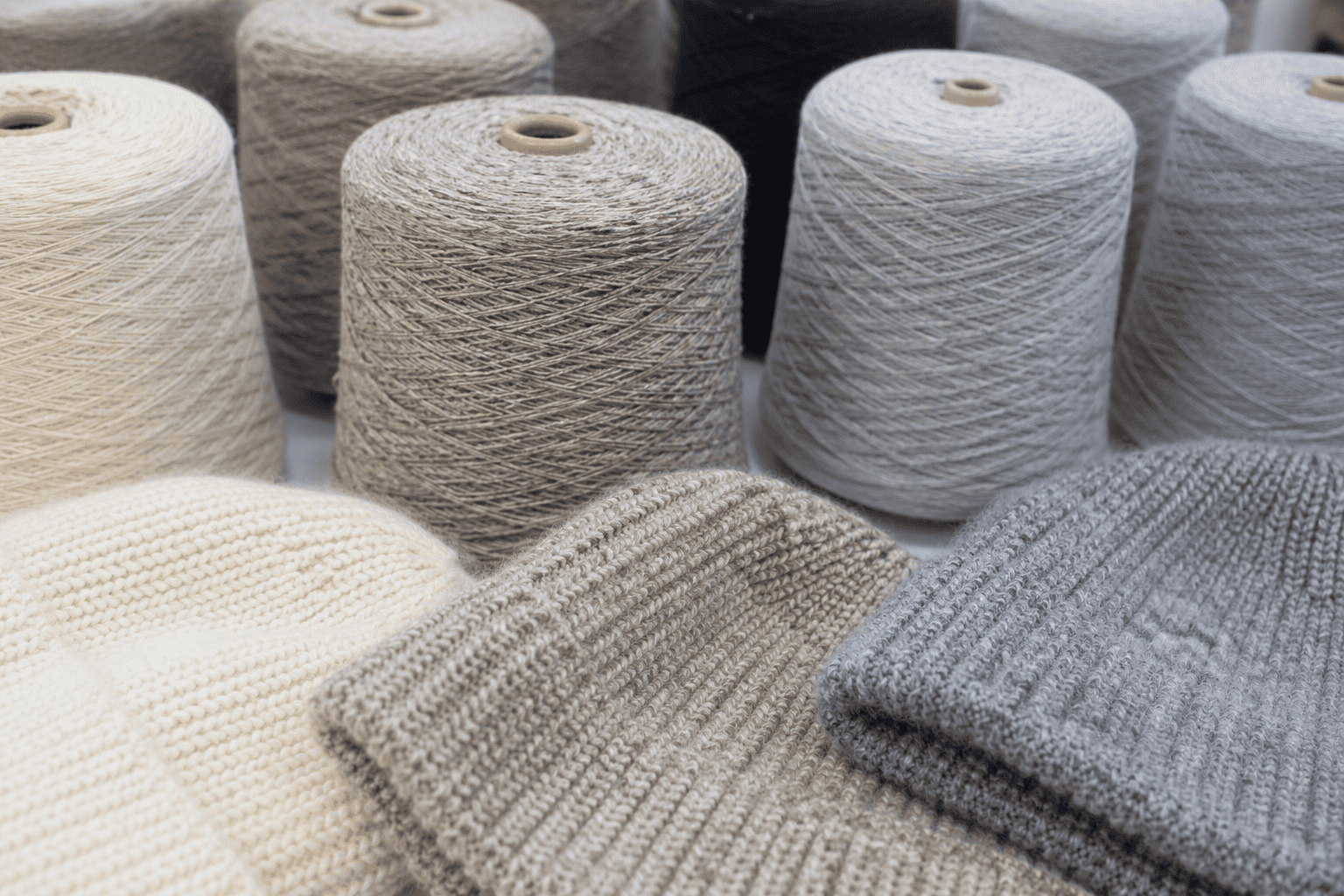
Many clients believe that the same material name should always mean the same result. In practice, the same material name can still vary by yarn count, fiber blend, dye lot, spinning quality, and supplier stability.5
Research on knitted fabrics also shows that yarn and fabric structure can influence physical performance such as pilling resistance and dimensional behavior. For buyers, this means material selection should not only focus on price. It should also consider how stable the yarn is in bulk production.
To reduce risk, we confirm material type, color, and sample hand feel before production. When needed, we work with yarn and dyeing suppliers to improve batch consistency.
What happens after the knitting machine does its job?
The knitting machine creates the main beanie panel or knitted body. But the hat is not finished yet. After knitting, the manual finishing stage begins, and this is where many appearance and durability issues can appear if the process is not controlled carefully.
After knitting, beanie panels are finished by hand. First, the crown is closed. Then, the side seam is joined. The seaming method depends on the buyer's quality requirement, market positioning, and budget.
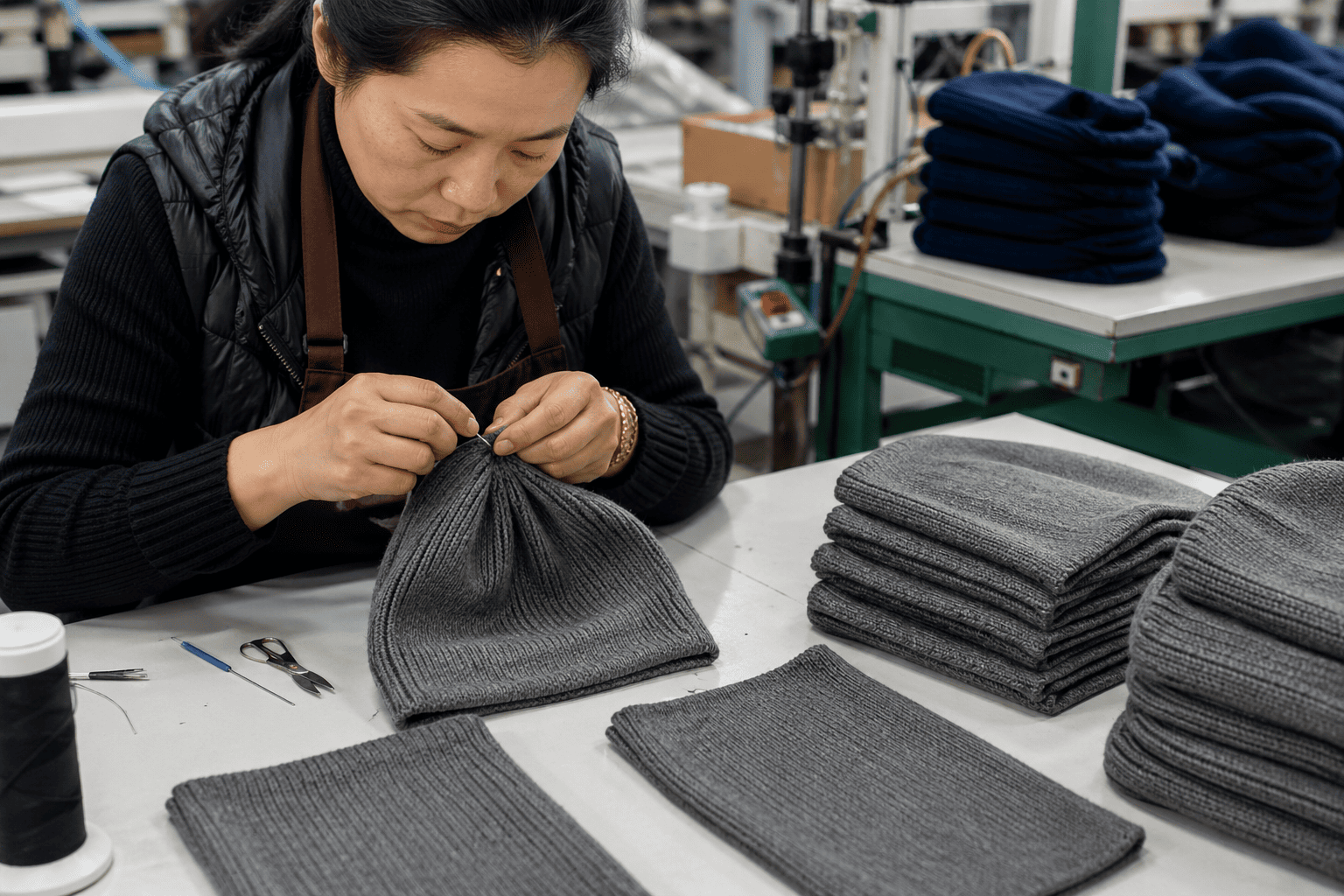
Once the machine knits the main body of the hat, the top needs to be closed to form the crown. If this step is not handled carefully, it may lead to loose stitches, holes, or an uneven crown shape.6 In knitted products, defects such as stitch irregularity and skipped stitches are known quality concerns7, and inspection is important for finding fabric flaws before they move further in production.
Two common joining methods are flat seam and linking seam. In knitwear manufacturing, linking is a more detailed technique that joins knitted edges and can create a flatter result compared with some faster joining methods. However, it usually requires more time and skill.8
Seaming Methods: A Practical Comparison
| Method | Speed | Cost | Appearance | Best For |
|---|---|---|---|---|
| Flat Seam | Faster | Lower | Standard, visible seam | Mid-market or price-sensitive orders |
| Linking Seam | Slower | Higher | Cleaner and flatter finish | Premium brands or higher-end markets |
We discuss these options with buyers based on their market needs. A price-sensitive order may choose a standard seam, while a premium retail order may require a cleaner finish.
Can washing and drying really make or break an order?
Washing and drying may sound like a simple laundry task. But for knitted hats, this step affects hand feel, fullness, shrinkage, and final size.9
Washing and drying need to be controlled according to the material and order requirement. Research on knitted fabrics shows that laundering and drying conditions can affect dimensional changes, and factors such as temperature, time, and humidity influence the behavior of knitted goods.
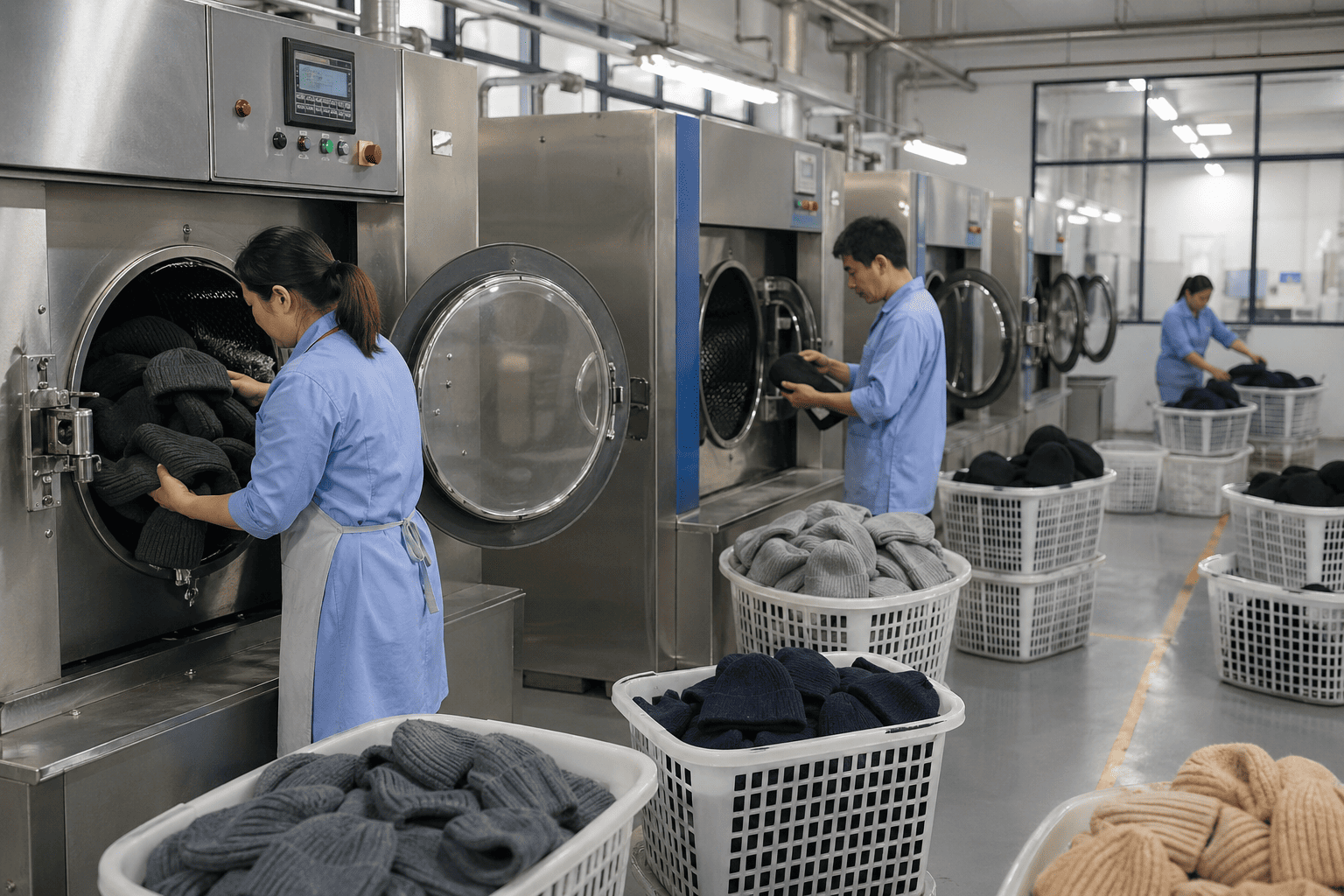
Our factory uses washing and drying equipment because finishing directly affects the final softness and fullness of the hat. We need to consider which materials are suitable for washing, how much softener to use, how long to wash, and how to control drying time and temperature.
Incorrect settings may affect hand feel, shape, or size stability. For example, some knitted fabrics may change when exposed to high washing temperatures, drying temperatures, or repeated laundering. This is why knitted hats should not be treated as simple flat fabric after knitting. They need controlled finishing.
Moisture control is also important before packing.10 Government and preservation sources note that microorganism growth on textiles is associated with damp conditions, and mold risk increases when humidity and temperature are not controlled. The U.S. National Park Service explains that microorganism growth on textiles is routinely associated with damp conditions, while the U.S. National Archives also states that controlling moisture is key to preventing mold growth in collections.
For production, the lesson is simple: beanies should be fully dried and checked before packing, especially in hot or humid seasons.
What are the final steps before a beanie is ready to ship?
The beanie is almost finished, but the job is not over. Rushing the final steps can lead to loose threads, crooked logos, poor shape, incorrect packing, or products that do not match the approved sample.
The final steps are about shaping, logo checking, inspection, and packing. Before shipment, finished hats should be checked for visible defects, loose threads, size, shape, branding accuracy, and packing requirements.
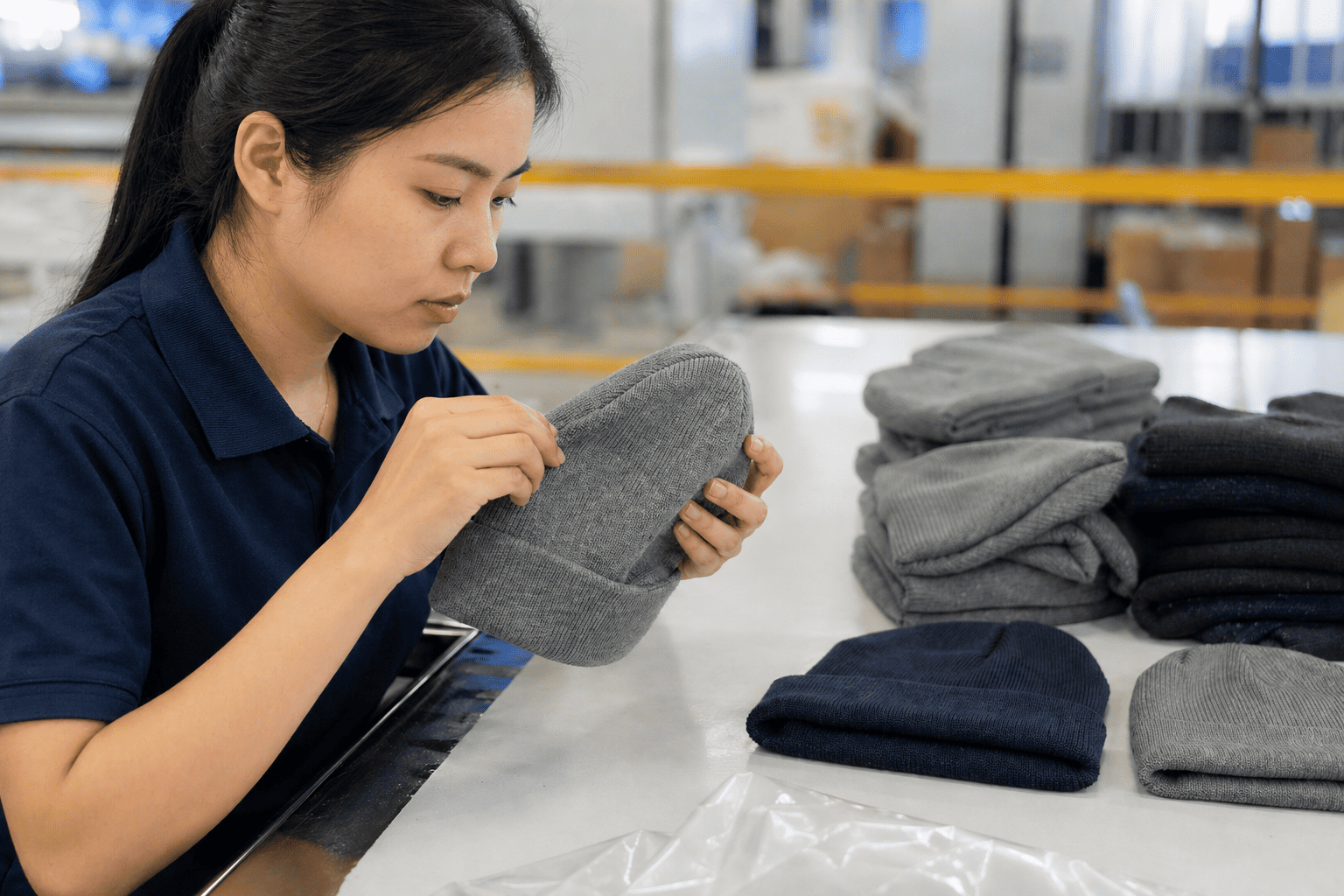
After drying, many beanies go through ironing or shaping. This helps improve the final look and supports better size and shape control. The worker needs to understand the material, the approved sample, and the target measurement.
Next is logo application or logo checking. We confirm the logo method, size, position, color, and final appearance against the approved sample. For embroidered logos, patches, woven labels, or other branding methods, the placement should be consistent across the order.
Before packing, finished hats are inspected for visible flaws. In apparel quality assurance, final inspection is used to check complete garments for defects and adherence to size and fit standards before they leave the manufacturing plant. For beanies, this usually means checking:
- extra threads
- holes or dropped stitches
- dirty marks
- incorrect logo placement
- size and shape problems
- packing quantity
- carton condition
Packing is also part of quality control. The carton should not be too empty, or the hats may move around during transport. It should also not be too tight, or the hats may be compressed and lose shape.11 Packing is arranged according to confirmed carton quantity and protection requirements to reduce deformation during shipment.
Conclusion
Making a beanie is not just about knitting yarn into a hat. It is a complete production process that includes sample confirmation, material control, knitting, hand finishing, washing, drying, shaping, logo checking, final inspection, and export packing.
For B2B buyers, the most important point is this: the earlier the details are confirmed, the lower the production risk. A reliable beanie manufacturing process is not only about speed. It is about keeping the bulk order aligned with the approved sample, reducing avoidable defects, and delivering products that meet the buyer's market requirements.
A manufacturing or apparel quality-control source can support the link between early errors, rework, batch disruption, and schedule delays. ↩
A textile/apparel production source can substantiate that confirmed specifications and approvals help prevent defects and rework. ↩
A source on apparel sampling can verify that the approved PP sample is used as the benchmark for bulk production quality and conformity. ↩
A textile engineering source can support that yarn properties affect knitted fabric appearance, tactile properties, and dimensional stability. ↩
A textile specification or testing source can show that material labels are incomplete without yarn count, blend, dye lot, and processing details. ↩
A garment quality-control source can verify that improper sewing or finishing can create visible seam and stitch defects. ↩
A textile inspection or defect-classification source can confirm these as standard quality concerns in apparel and knitted fabrics. ↩
A knitwear manufacturing source can support the claim that linking is more labor-intensive and skill-dependent. ↩
A textile finishing or laundering study can verify that washing and drying influence fabric feel, bulk/fullness, shrinkage, and dimensions. ↩
A government, museum conservation, or textile storage source can support the need to control moisture before packing textile goods. ↩
A packaging engineering or logistics source can support that insufficient void fill allows movement, while excessive compression can deform goods. ↩